


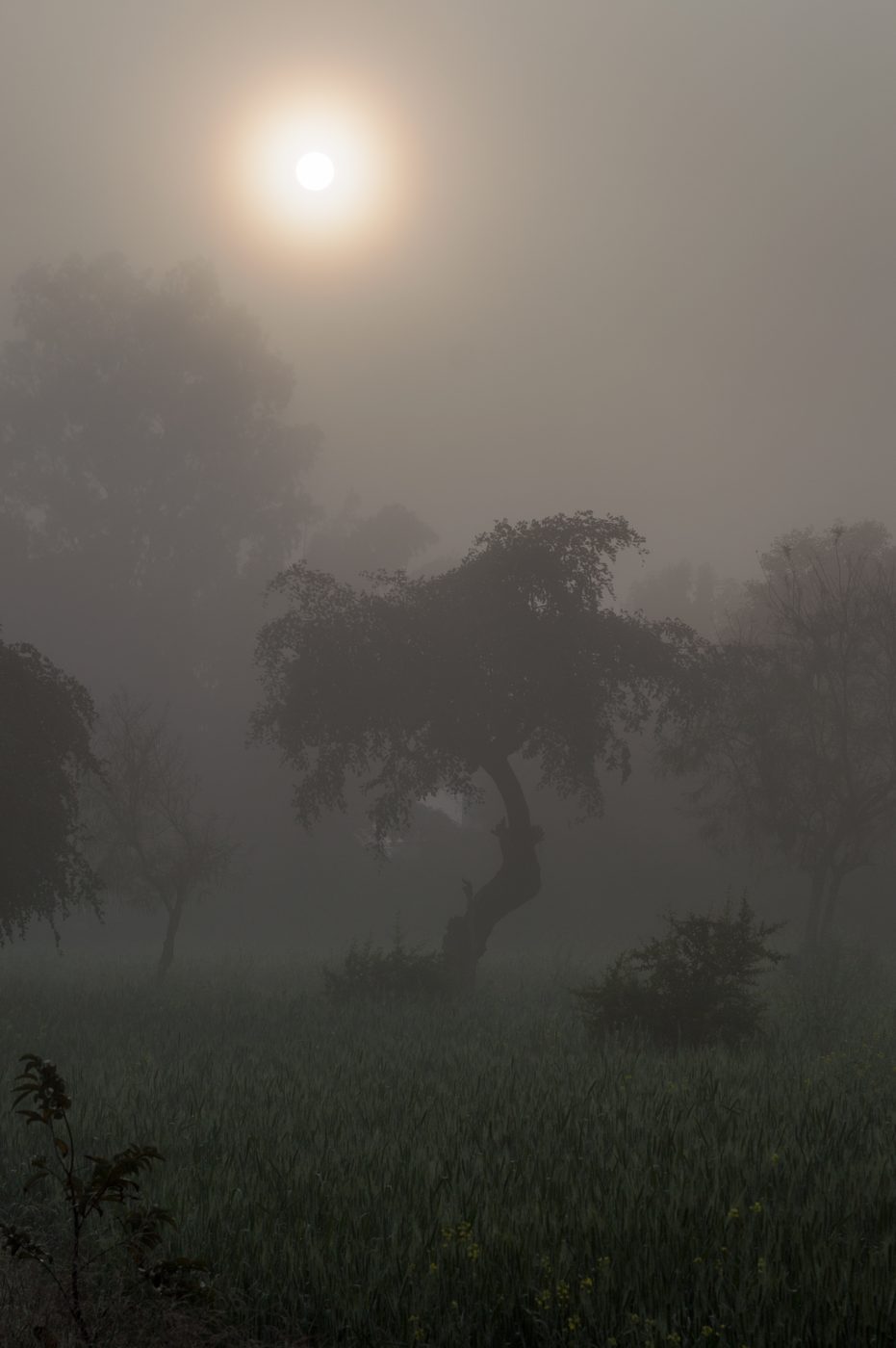
6 am
Mist, then birds
The fog sits on the fields until the sun burns it off. Kingfishers first, then everything else.
A family farm outside Rahatgarh. Rooms off a lamplit courtyard, lunch from the fields, a canal along the back, and nowhere you need to be.
Families coming back to the land. People who work from anywhere. Anyone using Madhya Pradesh as a slow base for its forts and stupas. Everyone sits down to the same lunch.
Our story, and the bird we named it for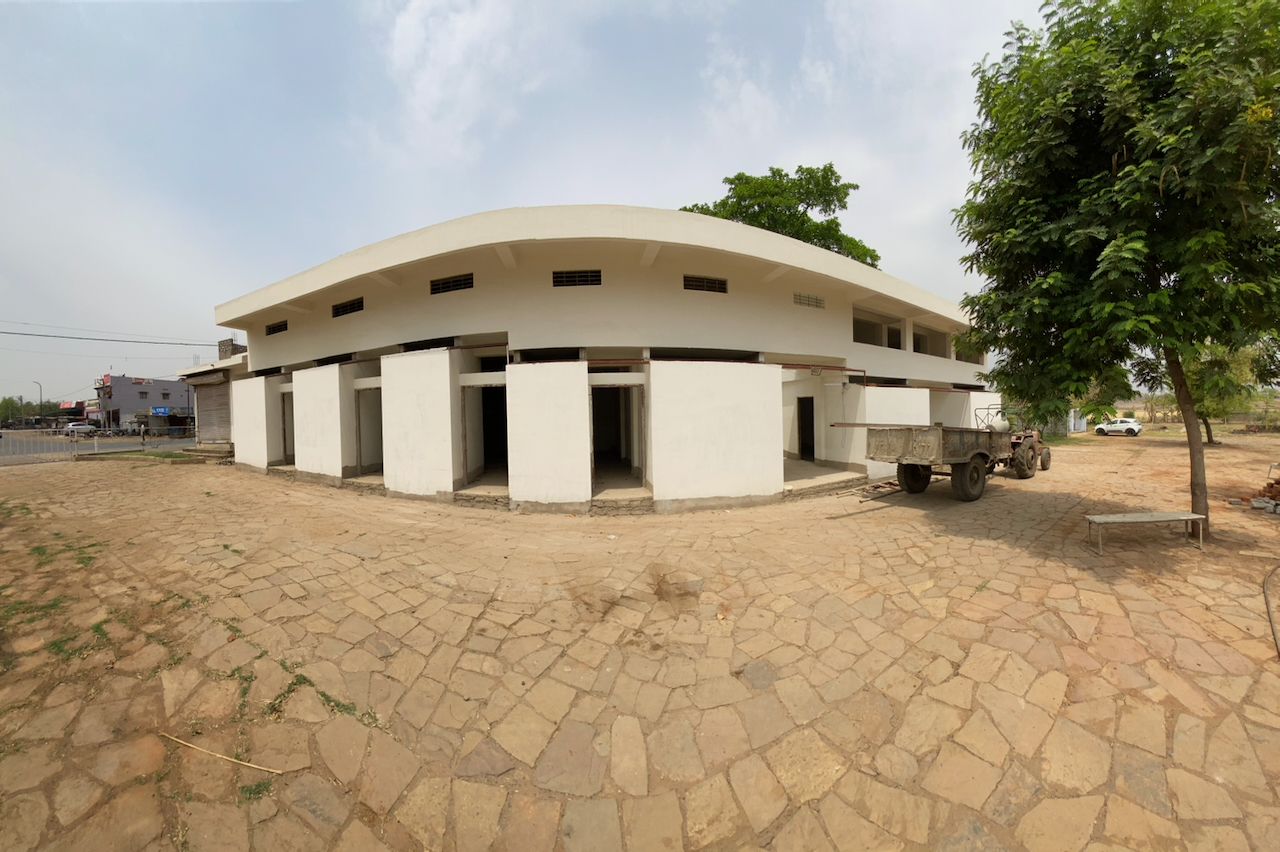
The fog sits on the fields until the sun burns it off. Kingfishers first, then everything else.
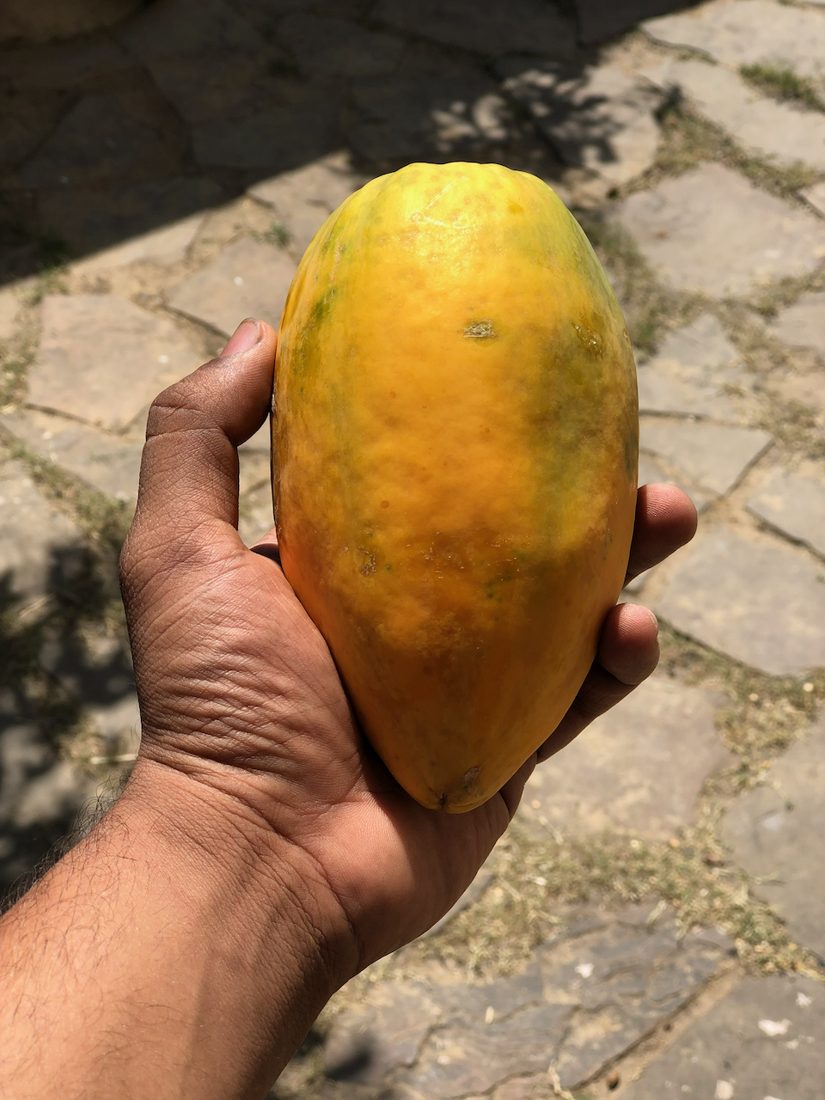
Papaya, custard apple, mulberries, chillies. Whatever the season is doing.
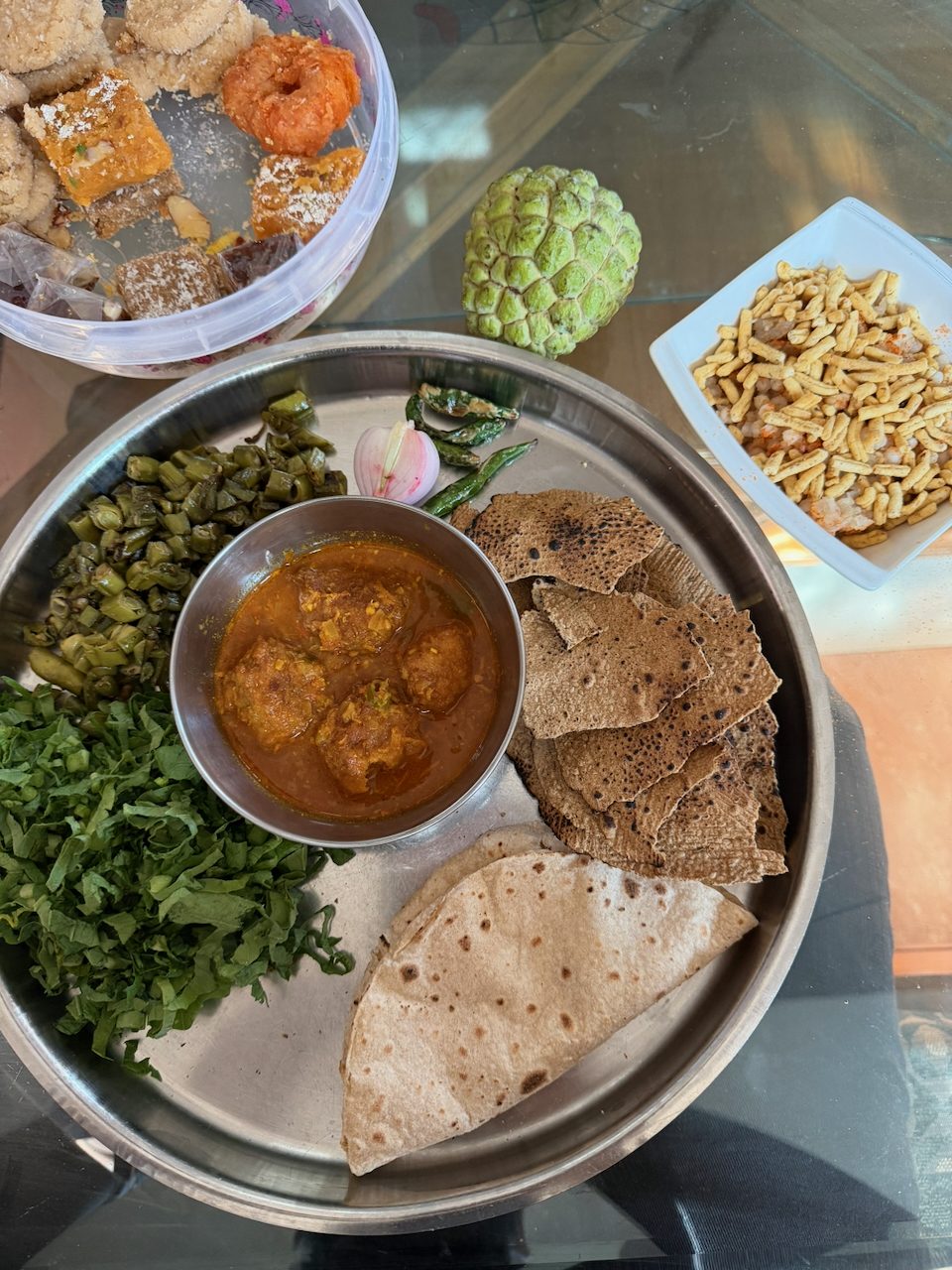
A thali that was still growing this morning. There is no menu; the season writes it.
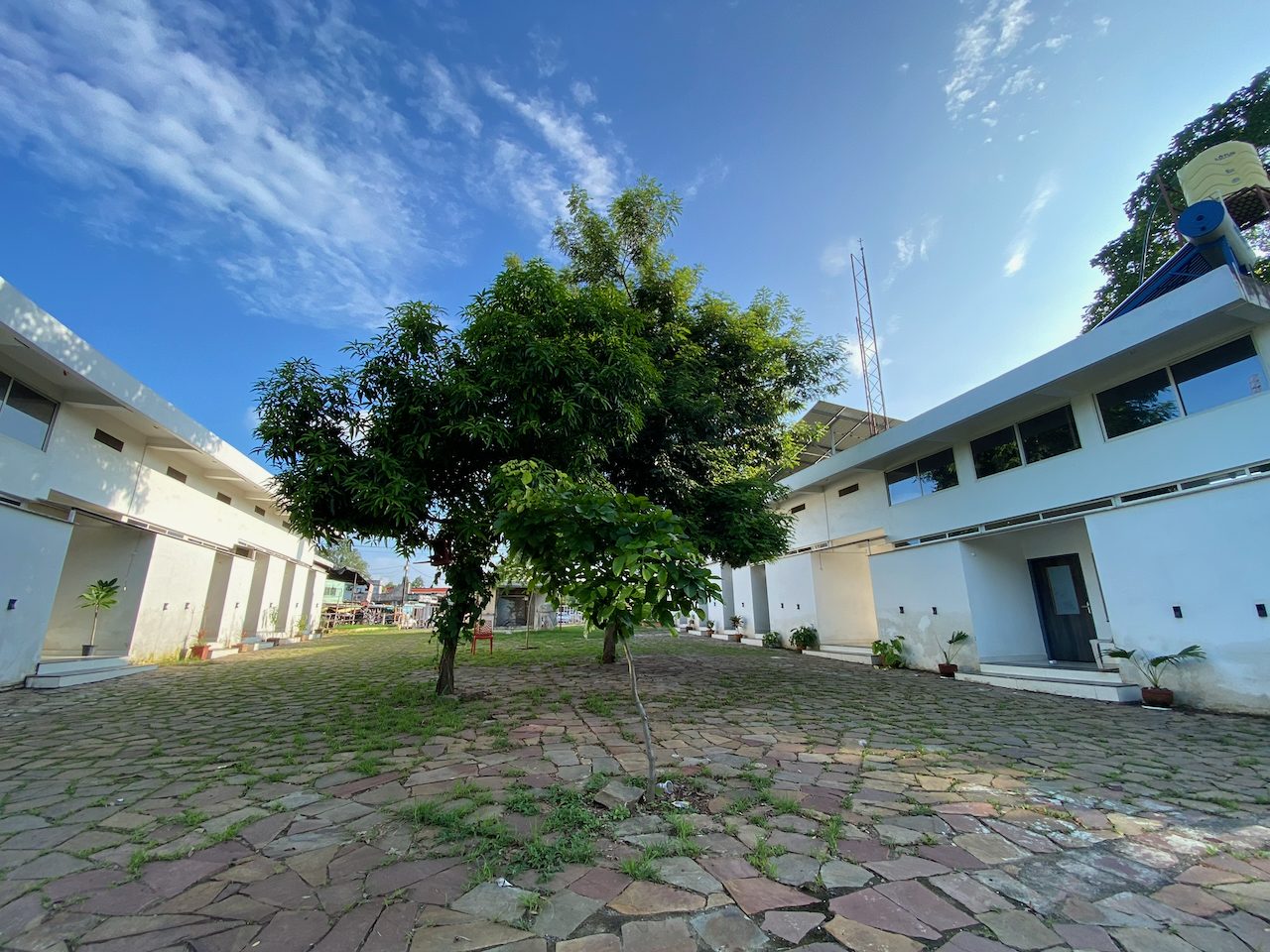
A chair under the mango tree. Wi-Fi if you must; a book if you're wise.
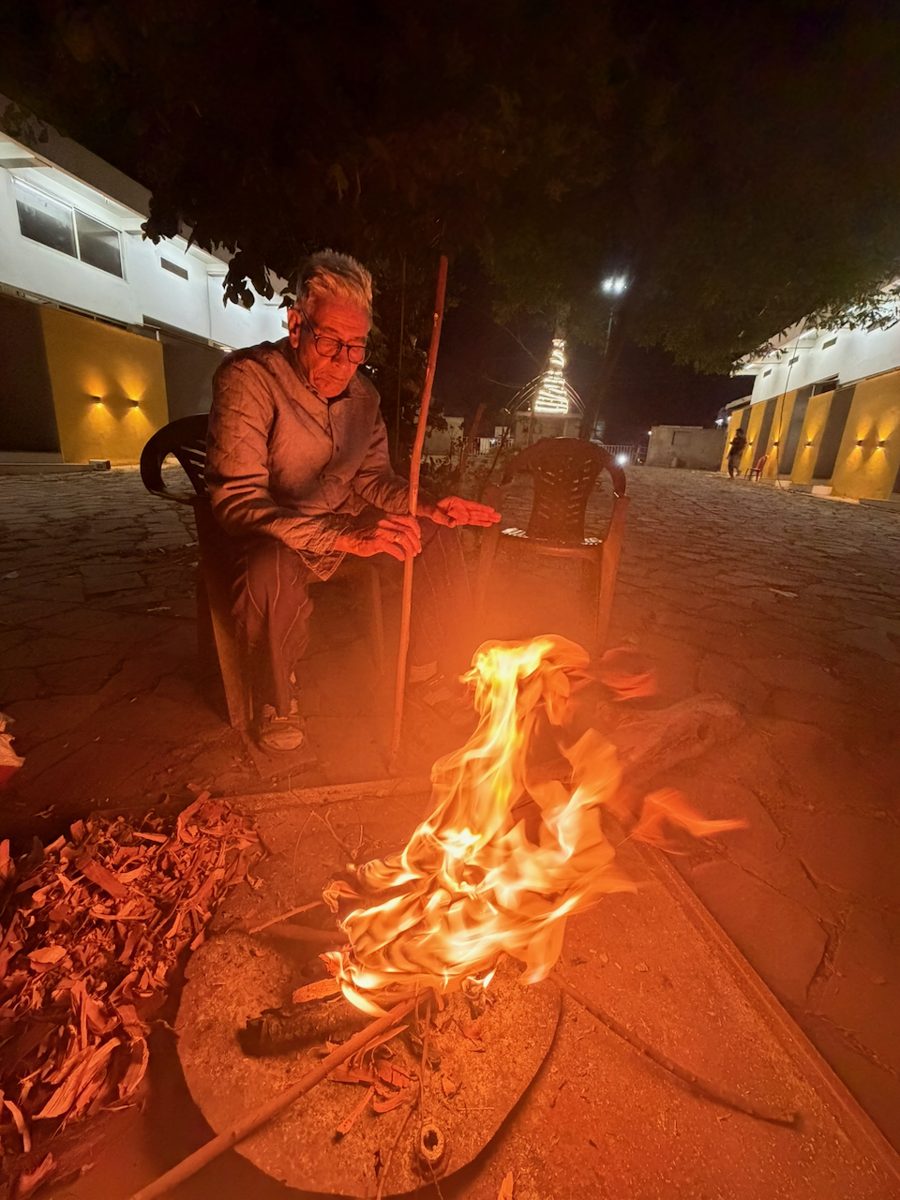
Corn on the coals, and a sky with no town underneath it.
Every building, gate and field, with this season's crop standing and the cows somewhere in the middle. The light is the real sun over Rahatgarh, right now. Tap a tag, jump to a spot, or see it at night.
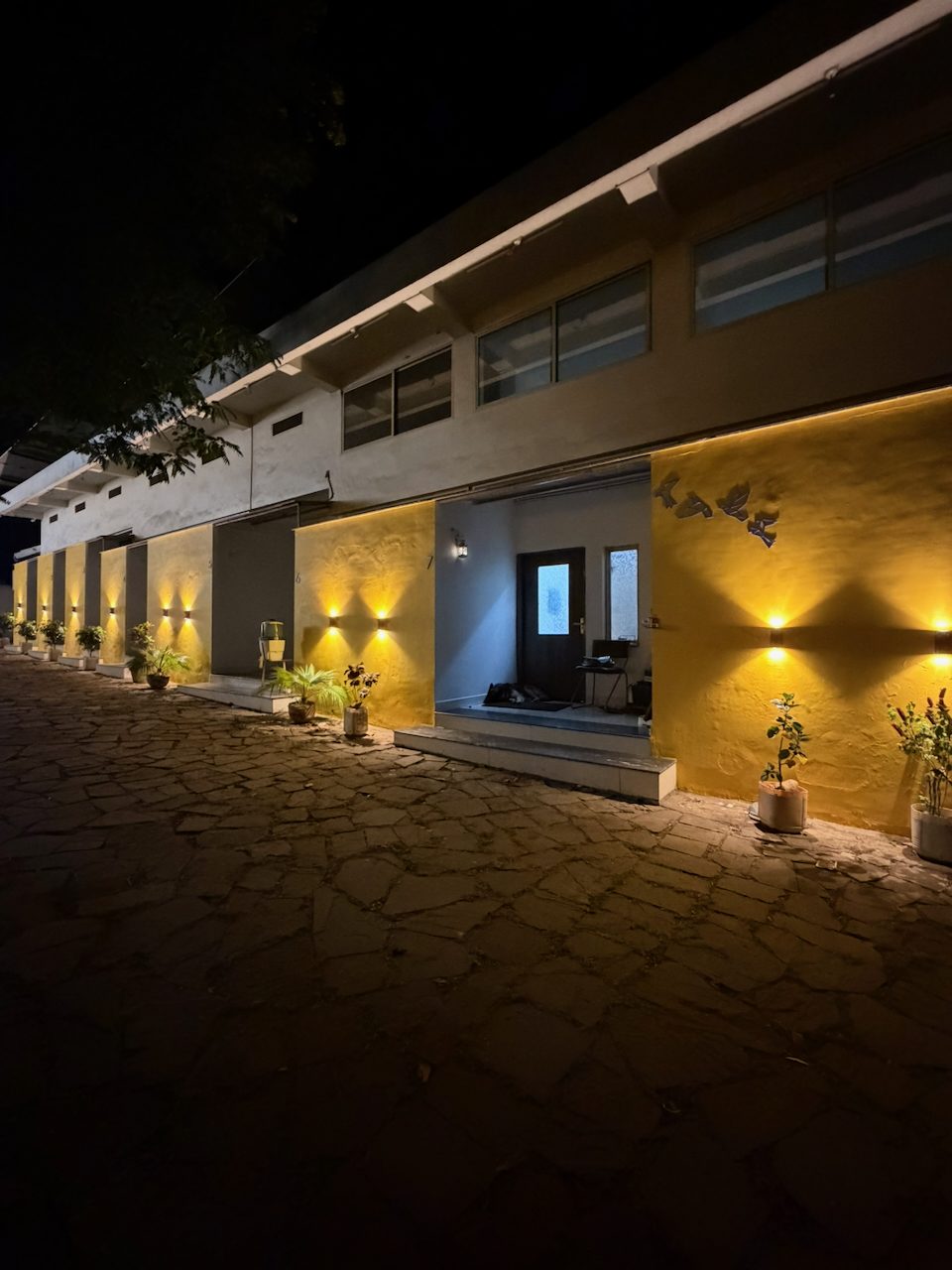 01StayThree rooms now, two more on the way, and a hall. AC, hot water, and power that never drops.
 02Farm TableHome-cooked, seasonal, and mostly from within sight of the kitchen.
 03ExperiencesBirding, macro photography, bread, soap, dyeing. Everything you make is yours.
 04Slow livingNo schedule, star-dark skies, and an Unplugged Stay if you want to switch off.
 05NearbyA waterfall and a fort at four kilometres; UNESCO Sanchi by lunch.
 06Pantry shopJams, pickles, wood-pressed oils and flours, from the same fields.
 07Team retreatsThe whole place for your team, carbon-light and tree-positive.
 08Our storyThe farm, the family, and the bird the Sanctuary is named for.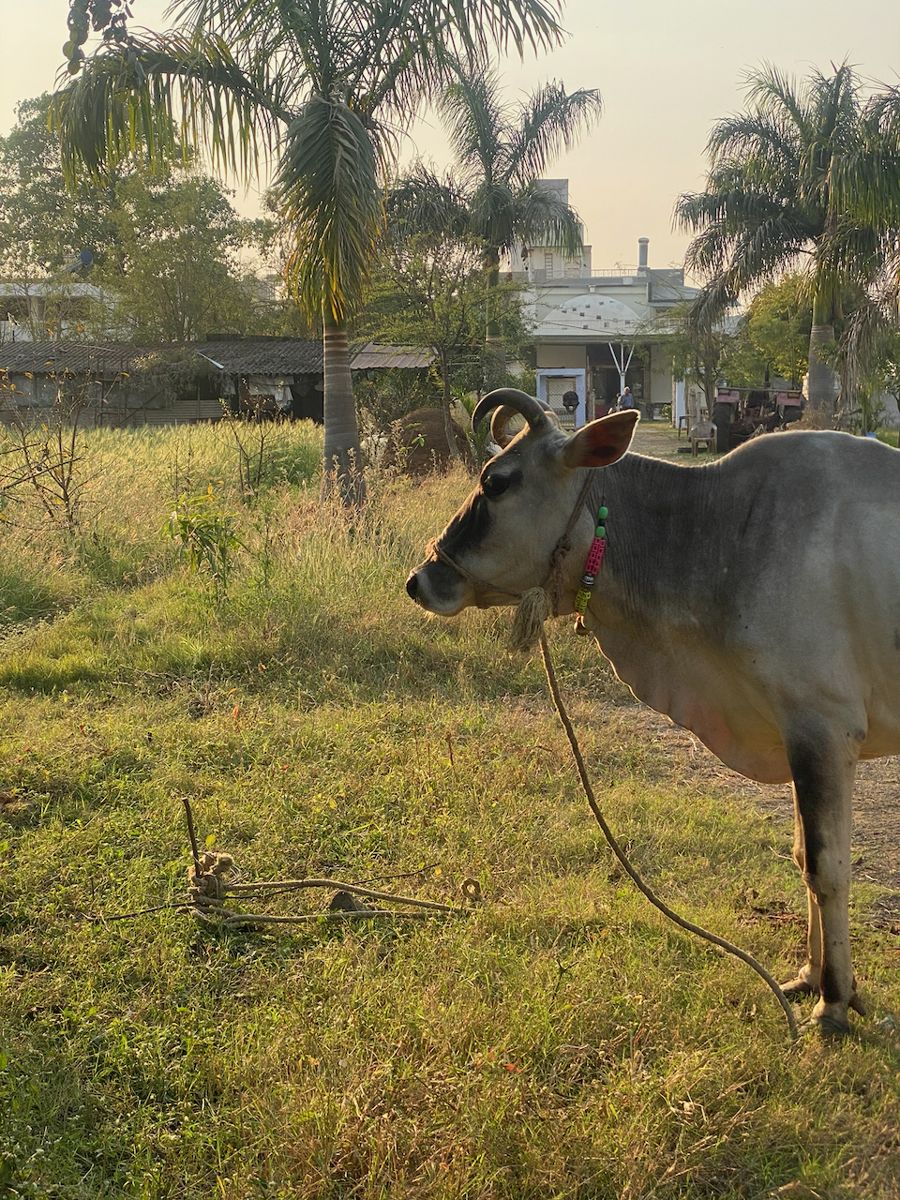
Kingfishers on the canal, rollers over the fields, egrets behind the plough. The Indian Paradise Flycatcher visits for a few days a year, which is how the farm got its name.
Why we named it for a bird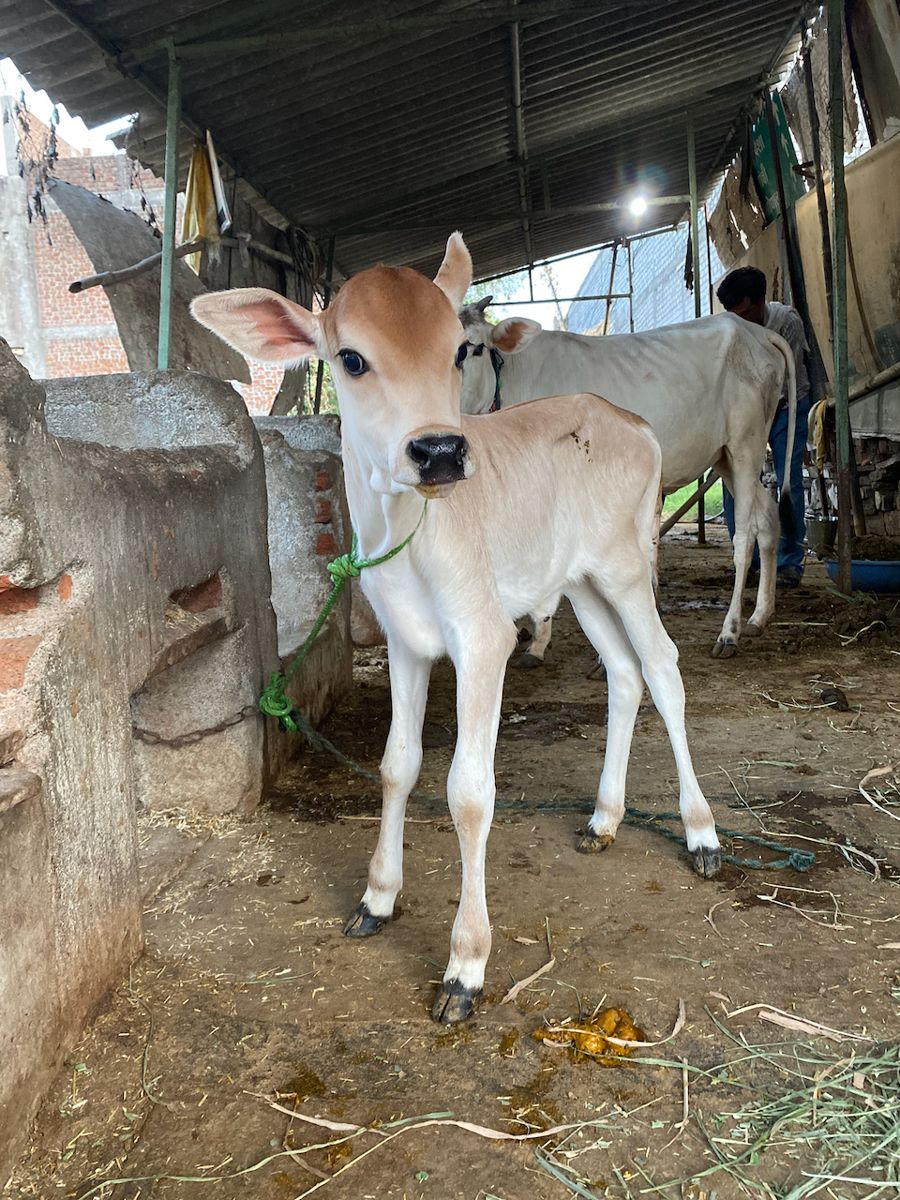
Tell us your dates on WhatsApp and we will do the rest, from the room to the meals to the car for a day trip.
When people ask why a farm and a guesthouse in Rahatgarh is called a sanctuary, I tell them about the bird on our gate.
The Indian Paradise Flycatcher is the state bird of Madhya Pradesh. The male is a small white streak with a long ribbon of a tail, and it is famously shy. Most years it comes to our land for two or three days, somewhere in the turn of a season, and then it is gone before you can be sure you saw it.
The first time I managed to photograph it, I had been sitting near the well for the better part of a morning, telling myself I would give it ten more minutes. It arrived without any ceremony, did its work in the low branches, and left. I sat there for a while afterwards, quite happy, having done nothing all morning but wait.
We could have named the place for something more reliable. But I liked that the bird decides when to come. It does not perform. It lands if the land is quiet and safe and full of the small insects it eats, and it leaves when it wants to. A sanctuary, to me, is simply a place that is worth landing on.
So we try to keep the farm that kind of place, for the bird and for the people who come to slow down for a few days. If you visit in the right week, you might see it. If you do not, you will still have spent your days somewhere the flycatcher thought was worth a stop.
Guests sometimes ask for the menu before they arrive, and I never quite know how to answer.
On a working farm the food is decided long before you sit down, and not by us. In summer the trees are heavy with mango. In the weeks after the rains the custard apples soften on the branch. In winter there are greens, roots, fresh wheat for the chapatis, and the physalis the children pick straight off the plant.
We cook what is ready. If you come in April you will eat differently than someone who comes in November, and that is the whole point. A vegetable that travelled three days in a truck to reach a city plate is picked here in the morning and cooked by evening. You can taste the difference, and once you have, a fixed menu starts to feel a little sad.
So when you pre-book your meals, we do not send a card of dishes. We tell you what the farm is giving that week, and we cook it the way we cook for our own family. Some of it you can gather yourself, walking into the field with a basket. The rest simply appears, hot, when you are hungry.
Eat what is there. It is one of the oldest ideas we have, and on a farm it still makes the most sense.
For most of my childhood, electricity in this part of Madhya Pradesh was a thing that came and went as it pleased. You planned your evenings around it.
Today the farm runs entirely on the sun. Twelve kilowatts of panels on the roof, a bank of batteries, and power that simply does not stop. Guests are often surprised that a farmstay this rural has fast internet and cool rooms straight through a power cut in the town beyond our gate.
But the solar is not really about comfort. It is about what a reliable, clean source of power lets a rural place become. A guest can take a video call from a shady corner and ship a week of work. A family can bring an elderly parent and know the fan will run all night. A team can hold a retreat here and know the footprint is genuinely small, because the power came off our own roof.
We started The Raahat Sanctuary, and Maadhyam Organics before it, to build something in the village rather than leave it behind. Power from our own roof, food from our own soil, and work that stays here. That is the quiet version of the thing everyone means when they say the word sustainable.
The sun does the rest.